Angela Vickroy, ANP-BC, OCN, and Jordan Smith, DNP, APRN, FNP-C: Earlier CAR T-Cell Therapy in Multiple Myeloma: Patient Selection, Education, and Support

Angela Vickroy and Jordan Smith explore how the evolving CAR T-cell treatment landscape is changing when patients can be considered for therapy. They discuss the importance of early referral and evaluating the whole patient, including functional status, organ function, and available caregiver support, while addressing common misconceptions surrounding age and prior stem cell transplant. The conversation also highlights the critical role of patient education in setting expectations for the CAR T-cell process, potential adverse events, and ongoing supportive care. Finally, they discuss collaboration between CAR T-cell centers and community providers to help ensure continuity of care during both the acute and long-term follow-up periods.

Topics covered:

  • Identifying and referring appropriate patients for CAR T-cell therapy earlier
  • Addressing misconceptions about age, prior transplant, and patient eligibility
  • Patient education, supportive care, and long-term follow-up after CAR T-cell therapy
MORE MULTIPLE MYELOMA ROUNDTABLES:

Amy Browning, APRN, and Theresa Bryant, LPN: The Safety Profile of CAR T Therapy

Msses. Browning and Bryant discuss how adverse events, including neurotoxicity and cytokine release syndrome, can manifest in patients with multiple myeloma who receive chimeric antigen receptor T-cell (CAR T) therapy. They describe how to spot neurotoxicity, and how this adverse effect can present differently in each patient. Additionally, they share their experiences treating these patients, and they stress the importance of patient and care partner education in order to diagnose and treat adverse effects in a timely manner.

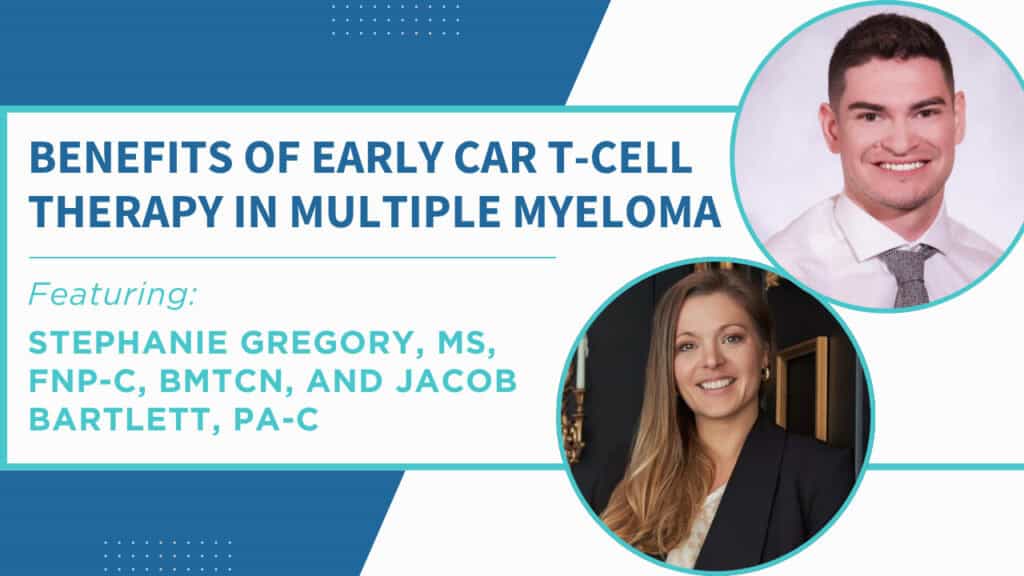
Benefits of Early CAR T-Cell Therapy in Multiple Myeloma

Stephanie Gregory, MS, FNP-C, BMTCN, and Jacob Bartlett, PA-C, from Northside Hospital discuss the clinical advantages of utilizing CAR T-cell therapy in earlier lines of treatment for multiple myeloma. They emphasize that early intervention, facilitated by prompt referrals to specialized centers, can lead to more durable remissions and a better quality of life for patients by utilizing their T-cells before they become exhausted by multiple prior treatments.