Katie Sellers, PA-C, and Jaime Román III, MPAS, PA-C: Optimizing CAR T Transitions from Community Practice to Tertiary Care: Part I

Katie Sellers, PA-C, a cellular therapy PA in Dallas, and Jaime Román III, MPAS, PA-C, a community oncology PA in Plano, open by reflecting on how quickly the myeloma treatment landscape has shifted, with CAR T now available as early as the second line. Sellers explains that patients treated earlier have had less cytotoxic exposure and better T-cell fitness, which supports stronger responses and fewer toxicities. The conversation then turns to bridging therapy, including the goal of reaching a very good partial response before infusion and why regimen choice depends on each patient’s disease features and prior exposures. Román describes the infrastructure that community practices need to deliver bispecific antibodies safely, and both emphasize how a shared electronic medical record and close working relationship ease handoffs.


Topics covered:

  • Clinical benefits of moving CAR T into earlier lines
  • Bridging therapy goals, regimen selection, and the role of community practices
  • Barriers to giving bispecific antibodies in the community
MORE MULTIPLE MYELOMA ROUNDTABLES:

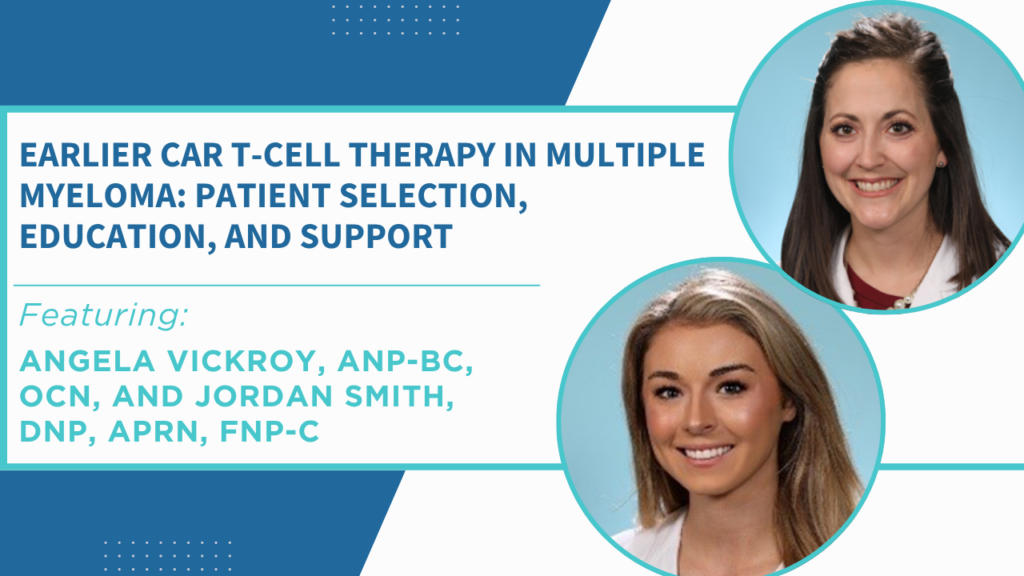
Angela Vickroy, ANP-BC, OCN, and Jordan Smith, DNP, APRN, FNP-C: Earlier CAR T-Cell Therapy in Multiple Myeloma: Patient Selection, Education, and Support

Angela Vickroy and Jordan Smith explore how the evolving CAR T-cell treatment landscape is changing when patients can be considered for therapy. They discuss the importance of early referral and evaluating the whole patient, including functional status, organ function, and available caregiver support, while addressing common misconceptions surrounding age and prior stem cell transplant. The conversation also highlights the critical role of patient education in setting expectations for the CAR T-cell process, potential adverse events, and ongoing supportive care. Finally, they discuss collaboration between CAR T-cell centers and community providers to help ensure continuity of care during both the acute and long-term follow-up periods.

Amy Browning, APRN, and Theresa Bryant, LPN: The Safety Profile of CAR T Therapy

Msses. Browning and Bryant discuss how adverse events, including neurotoxicity and cytokine release syndrome, can manifest in patients with multiple myeloma who receive chimeric antigen receptor T-cell (CAR T) therapy. They describe how to spot neurotoxicity, and how this adverse effect can present differently in each patient. Additionally, they share their experiences treating these patients, and they stress the importance of patient and care partner education in order to diagnose and treat adverse effects in a timely manner.

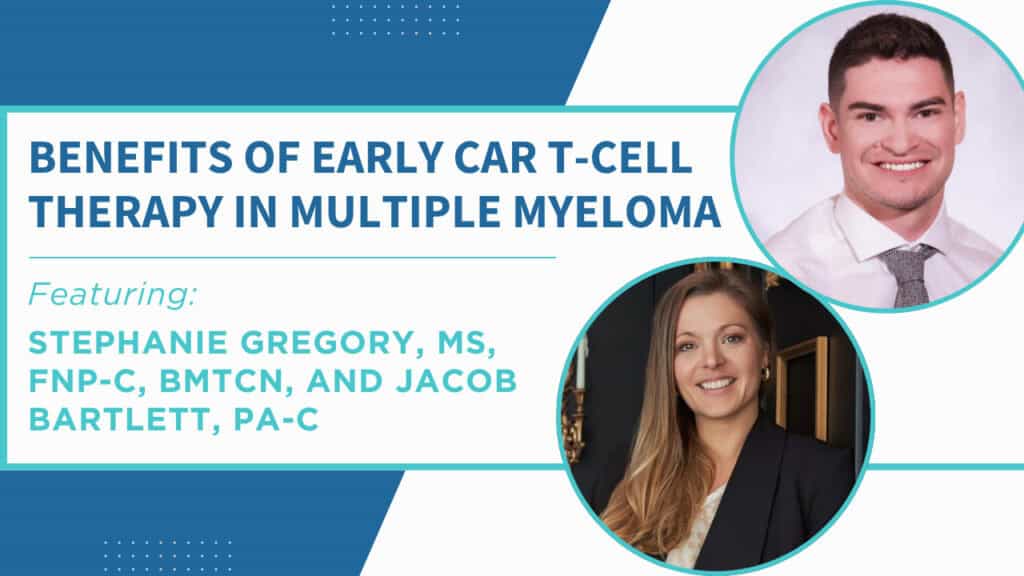
Benefits of Early CAR T-Cell Therapy in Multiple Myeloma

Stephanie Gregory, MS, FNP-C, BMTCN, and Jacob Bartlett, PA-C, from Northside Hospital discuss the clinical advantages of utilizing CAR T-cell therapy in earlier lines of treatment for multiple myeloma. They emphasize that early intervention, facilitated by prompt referrals to specialized centers, can lead to more durable remissions and a better quality of life for patients by utilizing their T-cells before they become exhausted by multiple prior treatments.