
Reprinted with permission. Support Care Cancer. 2025;33(5):374.*
by Karen Sweiss,* Ana Maria Avila Rodriguez,* John G. Quigley, Lisa Sharp, Kaily Kurzweil, Jaleel G. Sweis, Gregory S. Calip, Zacharie Hamilton, Chukwuemeka Uzoka, Elizabeth Ilo, Elliot Wolf, Damiano Rondelli, Douglas W. Sborov, Pritesh Patel,† and Craig C. Hofmeister†
Drs. Sweiss, Ilo, and Wolf are with Department of Pharmacy Practice, College of Pharmacy, University of Illinois, Chicago, Illinois. Drs. Avila Rodriguez,Quigley, Sweis, Hamilton, Uzoka, Rondelli, and Patel are with Division of Hematology/Oncology, University of Illinois at Chicago, Chicago, Illinois. Drs. Sharp and Calip are with Center for Pharmacoepidemiology and Pharmacoeconomic Research, University of Illinois at Chicago, Chicago, Illinois. Dr. Kurzweil is with Bone Marrow Transplant and Cellular Therapy, Northwestern Memorial Hospital, Chicago, Illinois. Dr. Sborov is with Division of Hematology and Hematologic Malignancies, Huntsman Cancer Institute at the University Salt, Lake City, Utah. Dr. Hofmeister is with Department of Hematology and Medical Oncology, Winship Cancer Institute of Emory University, Atlanta, Georgia.
*Co-first authors †Co-last authors
*Copyright: © 2025, the authors. This article is an open-access article distributed under the terms and conditions of the Creative Commons Attribution (CC BY) license (http://creativecommons.org/licenses/by/4.0/). The article may have been modified to adhere to journal style.
FUNDING: No funding was received for this article.
DISCLOSURES: The authors have no relevant conflicts of interest.
Abstract: Purpose: Overuse of opioids has been associated with a significant public health crisis, yet remain critical as adjunctive treatment in multiple myeloma (MM). Questions remain about the balance between the benefits to risks of ongoing opioid use, especially when the patient’s myeloma is in remission. This retrospective review focuses on the association of chronic opioid use (COU) in a patient population that is predominantly people of color. Methods: A cohort of 174 patients with MM who received autologous stem cell transplant (ASCT) at an urban medical center were studied. Results: Baseline COU was observed in 52.9% of patients. COU rates and average morphine milligram equivalents (MME) per day were similar in those with and without bone disease. Previous illicit drug use was associated with a higher baseline COU. A total of 142 (81.6%) patients received opioids during ASCT admission, while 105 (60.3%) were discharged on opioids and 72 (41.4%) met criteria for COU at 6 months. Opioid use at hospital discharge was associated with a higher 6-month COU (P=0.008). COU at 6 months was independently associated with worse overall survival (OS; P=0.006). Conclusion: We describe high rates of baseline COU in MM unrelated to bone disease. A number of patients started opioids during ASCT and were still taking them at 6-month follow-up visit. We demonstrate a negative association of 6-month COU on OS but not on progression-free survival, suggesting that opioid-related morbidity may play a role. These data highlight the need to test causality of opioid use on survival while simultaneously improving the management of pain in MM. KEYWords: Opioids, pain, multiple myeloma, autologous transplant
Introduction
Osteolytic bone lesions are a frequent complication of multiple myeloma (MM),1 increasing morbidity and mortality.2 Patients may also develop peripheral neuropathy from thalidomide or bortezomib which decreases quality of life and can persist after completion of treatment.3 Thus, opioids are often thought of as a cornerstone of myeloma treatment.4
In recent years, driven by the opioid epidemic, increased attention has been given to opioid risks in the treatment of noncancer pain, and there has been an increase in guidelines and consensus recommendations aimed at addressing opioid overuse and/or misuse.5,6 However, the Centers for Disease Control and Prevention (CDC) guideline for prescribing opioids for chronic pain excludes patients undergoing active cancer treatment, even though similar levels of pain have been reported in patients during and after completion of cancer treatment.7 Emerging data suggest that patients with cancer are at equal risk of using a prescription opioid in a way not directed by the prescriber when compared with patients without cancer,8 even though patients with cancer are 10 times less likely to die from opioid overdose vs the general population.9
The majority of cancer survivors receive opioids during cancer treatment, and at least a third will continue to experience chronic pain even after completing cancer treatment.10 While opioids are an important aspect of pain management during cancer treatment, their role for those who have completed curative treatment is less clear. Recent studies have demonstrated that cancer survivors are more likely to receive long-term and high-dose opioid prescriptions compared to patients without cancer, particularly in the early years after their diagnosis.8,11
The consequences of long-term opioid use in patients with hematologic malignancies are not well described. While emergency department visits for opioid overdose in patients with cancer is extremely rare, one report using the Healthcare Cost and Utilization Project Nationwide Emergency Department Sample of 35,339 opioid-related emergency department visits in patients with cancer noted that patients with MM were at increased risk for overdose (odds ratio [OR]: 1.73, 95% confidence interval [CI]: 1.32–2.26); interestingly, almost none of those patients had myeloma bone disease, but a quarter were classified as having a mood or substance use disorder.12 We hypothesized that patients with MM with extensive myeloma bone disease or pathologic compression fractures would have the highest prevalence of opioid use, and that these patients would continue to use opioids whether they reached remission or not. In an unselected cohort from an academic center serving predominantly minority patients, we aimed to quantify chronic opioid use (COU) before autologous stem cell transplant (ASCT), identify correlates (disease characteristics, sociodemographic or psychosocial) of COU at baseline and at 6 months after transplant, and determine whether opioid exposure is associated with survival outcomes post-transplant.
Methods and statistical analysis
Study design. After obtaining institutional review board approval, we performed a single-center retrospective chart review of adult patients ≥18 years with a confirmed diagnosis of MM using the International Myeloma Working Group (IMWG) and World Health Organization (WHO) criteria and who received high dose melphalan 140 to 200 mg/m2 followed by ASCT between January 1, 2005 and December 30, 2019.
Data collection. Patient demographic, clinical, and treatment data were abstracted from our electronic medical record (EMR) and entered into a secure online Research Electronic Data Capture (REDCap) system.13 Data regarding factors that have been previously associated with opioid use in noncancer patients such as age, gender, race, history of substance use disorder (ie, smoking, alcohol, and illicit drugs), history of psychiatric disease (ie, depression, anxiety, and other psychiatric illnesses), insurance status (ie, Medicaid, Medicare, private, or other), employment status (ie, unemployed, disability, employed, or retired), and education level (ie, none, high school, GED, technical, or college degree) were collected. Disease and treatment-related factors were collected including the presence of bone disease, a history of skeletal-related events prior to ASCT (ie, a pathologic fracture, spinal cord compression, necessity for radiation to bone for pain or impending fracture or surgery to bone), time to ASCT from diagnosis, myeloma protein subtype, number of prior lines of therapy, receipt of novel agent induction and/or post-ASCT maintenance therapy, pre- and post-ASCT IMWG response, the presence of high risk fluorescent in situ hybridization (FISH) or karyotypic lesions,14 and International Staging System (ISS) at diagnosis. Bone disease in MM was defined as the presence of osteolytic bone lesions or the presence of osteoporosis with compression fractures attributable to the underlying clonal plasma cell disorder. Because this retrospective study included patients diagnosed with myeloma before and after the updated 2014 IMWG criteria were adopted, conventional skeletal radiography, magnetic resonance imaging (MRI), fludeoxyglucose-positron emission tomography (FDG-PET), PET-computed tomography (CT), or whole-body CT were all acceptable as imaging technologies to demonstrate bone disease.15
Objectives. Our primary endpoint was persistent COU 6 months following ASCT as all melphalan-related toxicities other than fatigue have resolved by 6 months following ASCT. COU was defined as having any prescribed opioids or dosing for at least 90 days continuously, or opioid prescriptions for 120 nonconsecutive days based on previously established criteria set by CONsortium to Study Opioid Risks and Trends (CONSORT) to characterize and classify opioid use.16,17 Prolonged or persistent use was defined as opioid prescriptions filled 6 to 12 months after ASCT. High-risk opioid use (>50 MME) was defined per the CDC.5 Opioid use was captured through recurring prescriptions in the medical record at the time of follow-up visits. Use of opioids was assessed prior to ASCT (“baseline”), during hospitalization for ASCT, at hospital discharge, and at 30-day, 90-day, 180-day, 1-year, 2-years, and 5-years post-ASCT. All patients were hospitalized for ASCT and discharged once there was hematologic recovery with adequate resolution of chemotherapy-related toxicities. The definition of new persistent use included patients who were previously opioid-naïve prior to ASCT and who filled at least 3 opioid prescriptions after ASCT. Opioid data included the generic name of the opioid, the maximum daily dose prescribed, whether it was short-acting, long-acting, or both, and the documented indication. Responses were recorded with the assumption that the opioids were taken according to the prescribed dose and frequency. Daily opioid doses were converted to MME using standard conversion factors.18 We additionally documented adjuvant analgesic (ie, gabapentin, pregabalin, tricyclic antidepressants, or serotonin-norepinephrine reuptake inhibitors). For analysis of survival outcomes, patients were divided into 2 groups: COU and non-COU. Progression-free survival (PFS) was defined as time from ASCT to progression or death. Overall survival (OS) was defined as time from ASCT to death. Survival was censored at the last outpatient clinic follow-up if the patient was still alive. Because our center is a tertiary referral center for ASCT, patient follow-up was restricted to clinic visits at our institution and not the referring practice. OS and PFS were landmarked at 6 months to remove patients who progressed before 6 months in order to determine the effect of opioid use on survival in those who had not progressed as defined by the IMWG.
Statistical analysis. Descriptive statistics (ie, mean and standard deviation [SD] or median and range for continuous variable, and count and percent for categorical variable) were provided for demographic, clinical, and opioid use. Chi-squared tests were used for comparisons of categorical variables (ie, to compare opioid use between patients with and without bone disease), and 2-sample t-tests were used for comparisons of continuous variables. Mean MME doses received were compared between COU and non-COU patients using t-tests. All reported P values were 2-sided, and <0.05 were considered statistically significant. A modified Poisson regression model including factors such as age, race, presence of bone lesions, ISS, high-risk FISH/karyotype, use of novel agent induction, education level, smoking, alcohol, and illicit drug use history, use of nonopioid analgesics, type of insurance, and employment status was performed to identify predictors of COU at baseline and at 6 months after ASCT. Of note, race, education level, and employment status were self-reported in the electronic health record. Landmark OS and PFS analyses were performed at 6 months after ASCT to assess the impact of ongoing COU. A multivariate Cox proportional hazards ratio model adjusted for known prognostic factors (ie, ISS, high-risk karyotype, and bony disease) was performed to identify predictors of OS.
Results
A total of 174 patients diagnosed with MM who underwent ASCT between January 1, 2005 and December 30, 2019 were included in the final analysis. Baseline characteristics of the entire cohort are summarized in Table 1. The median age of the entire cohort was 59 (29–78) years, 90 (51.7%) of whom were male. Our patient population consisted predominantly of Black (n=105, 60%) and Hispanic (n=24, 13.8%) patients. At diagnosis, 111 (63.8%) patents were found to have IMWG-defined bone disease with 45 (25.9%) patients with evidence of a fracture. Most patients had either immunoglobulin G (IgG) subtype (n=106, 60.9%) or light-chain disease (n=35, 20%). Forty-eight (27.6%) patients had a high-risk FISH/karyotype, and most patients were diagnosed with either ISS stage 2 (n=45, 25.9%) or 3 (n=54, 31%) disease. The median time to transplant was 7 (range: 3–144) months, and the median number of lines of therapy received prior to ASCT was 1 (range: 1–5). The median follow-up of our cohort was 31 (range: 1–216) months. The majority of patients received a novel agent-based induction consisting of a proteasome inhibitor or an immunomodulator drug (n=145, 83%) and post-ASCT either single or combination maintenance therapy (n=115, 71%).
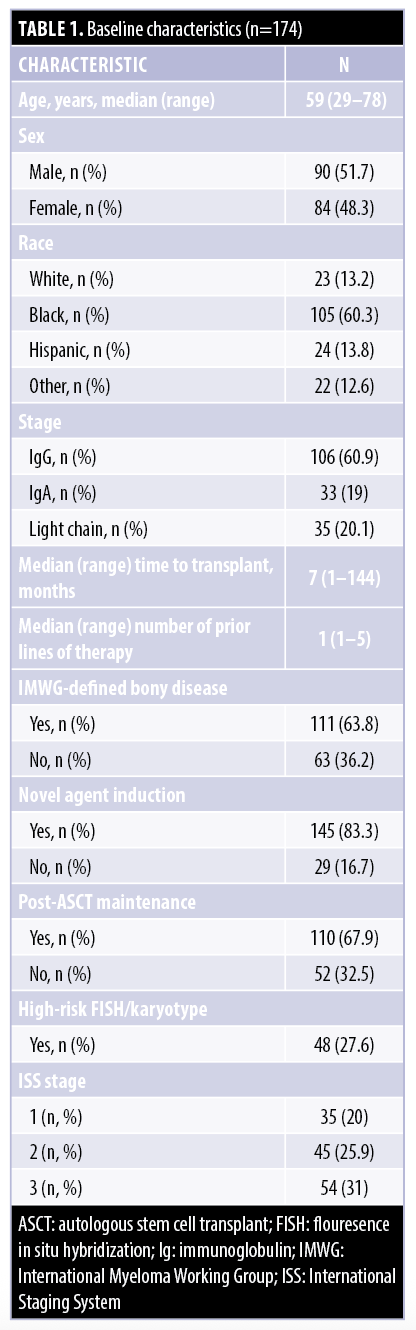
At the time of ASCT, COU was observed in 92 (52.9%) patients, 27 (29.3%) of whom did not have prior history of bone disease. The most frequently prescribed opioids were hydrocodone (n=51, 55.4%), morphine (n=27, 29.3%), tramadol (n=29, 31.5%), and fentanyl (n=10, 10.9%). Six (20.7%) patients were coprescribed tramadol with another opioid. The baseline mean daily MME was 65.3 mg (SD: 69.97). Both COU rates (52.4% vs 54%, P=0.98) and average MME per day (69.5 vs 55.2 mg; P=0.37) were similar between patients with and without bone disease. In Poisson regression analysis, previous illicit drug use was associated with a higher incidence of baseline COU (RR: 4.07, 95% CI: 1.53–10.82; P=0.005). The use of nonopioid analgesic drugs (RR: 0.024, 95% CI: 0.09–0.63, P=0.004), being retired (RR: 0.49, 95% CI: 0.29–0.83; P=0.008), or employed (RR: 0.37, 95% CI: 0.15–0.91; P=0.031) were associated with lower baseline COU. Patients with ISS stage 1 (RR: 0.33, 95% CI: 0.12–0.90; P=0.03) and 2 (RR: 0.25, 95% CI: 0.09–0.70; P=0.008) had a lower incidence of COU. Neither the presence of bony disease (RR: 1.11, 95% CI: 0.78–1.58; P=0.569), psychiatric illness (RR: 1.39, 95% CI: 0.5—3.88; P=0.526) or myeloma-related fractures (RR: 1.01, 95% CI: 0.68–1.51; P=0.963) were associated with COU at the time of ASCT. Race, insurance status, and education were not found to be independent predictors of baseline COU.
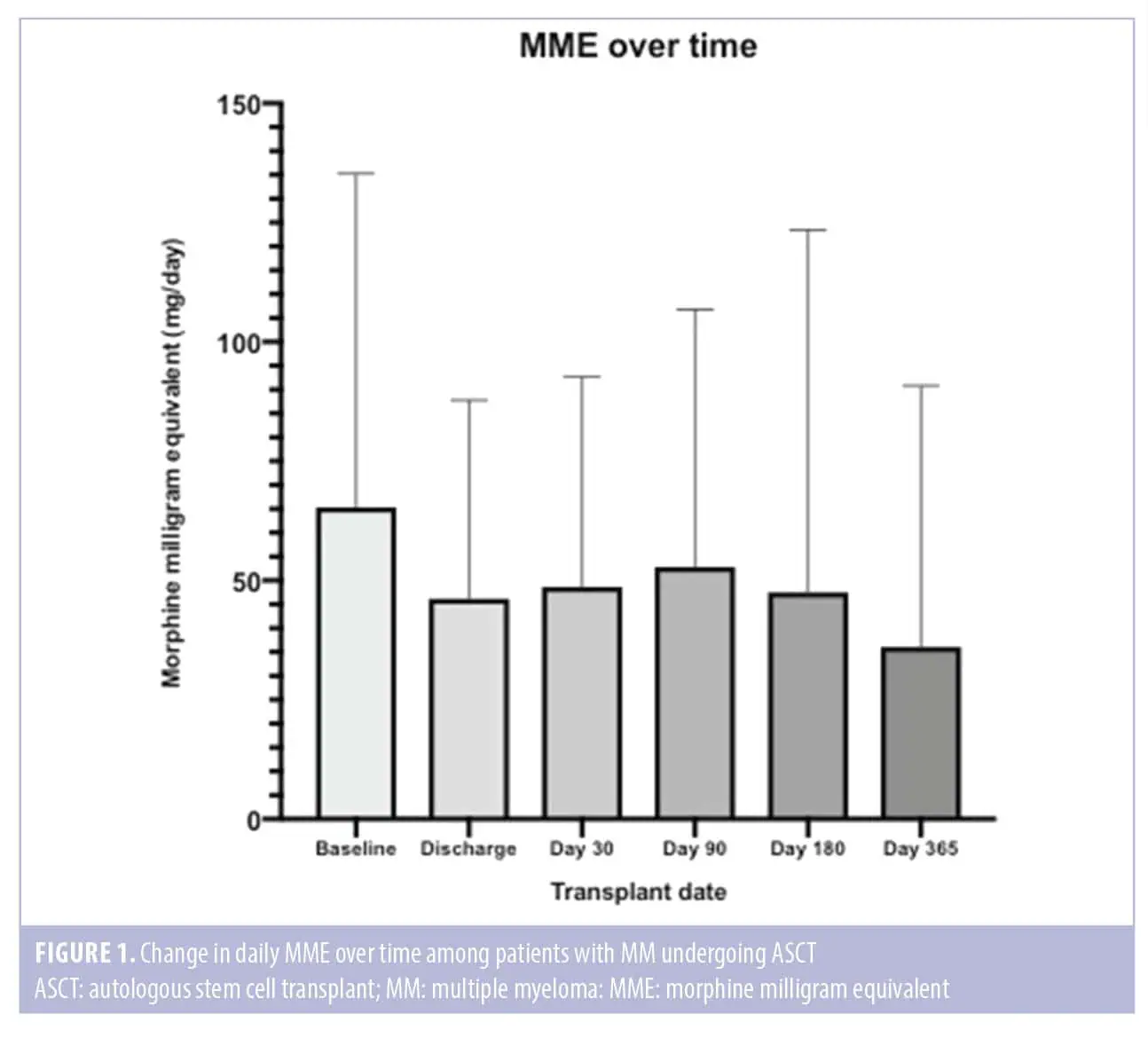
Among the entire cohort of 174 patients, 142 (81.6%) patients received opioids during the ASCT hospitalization, while 105 (60.3%) were discharged on opioids. Documented reasons for being discharged on opioids were the presence of musculoskeletal (n=38, 45.8%), generalized (n=16, 19.3%), neuropathic (n=12, 14.5%), residual mucositis-related (n=11, 14.5%) or headache-related (n=6, 7.2%) pain. Seventy-two of 174 (41.4%) patients continued to have COU at 6 months. The mean daily MME at 6 months remained relatively high at 47.15 mg (SD: 74.56). The most commonly used opioids at 6 months were hydrocodone (n=22, 30.6%), tramadol (n=12, 16.7%), morphine (n=7, 9.7%), and oxycodone (n=5, 6.9%). Among the 105 patients discharged on opioids, 63 (60%) had COU at 6 months after ASCT. Furthermore, in baseline nonopioid users (n = 82), 30 (36.6%) patients became new opioid users after hospital discharge, and of these, 13 remained on opioids at 6 months. While baseline COU was not associated with higher 6-month COU, opioid use at hospital discharge was strongly associated with COU at 6 months (RR: 4.21, 95% CI: 1.46–12.11; P=0.008). A trend was observed in patients with a history of psychiatric illness where they were found to be more likely to have COU at 6 months (RR: 2.01, 95% CI: 0.92–4.41; P=0.081). In contrast, indicators of disease burden, including bony lesions, were not associated with 6-month COU. Figure 1 depicts daily MME patterns from baseline to 1 year after ASCT. When evaluating the change in MME from baseline to 180 days post-ASCT (with MME for new users being considered as dose escalations), we observed 23 (32%) dose escalations, 25 (34.7%) dose de-escalations, and 24 (33.3%) stable doses.
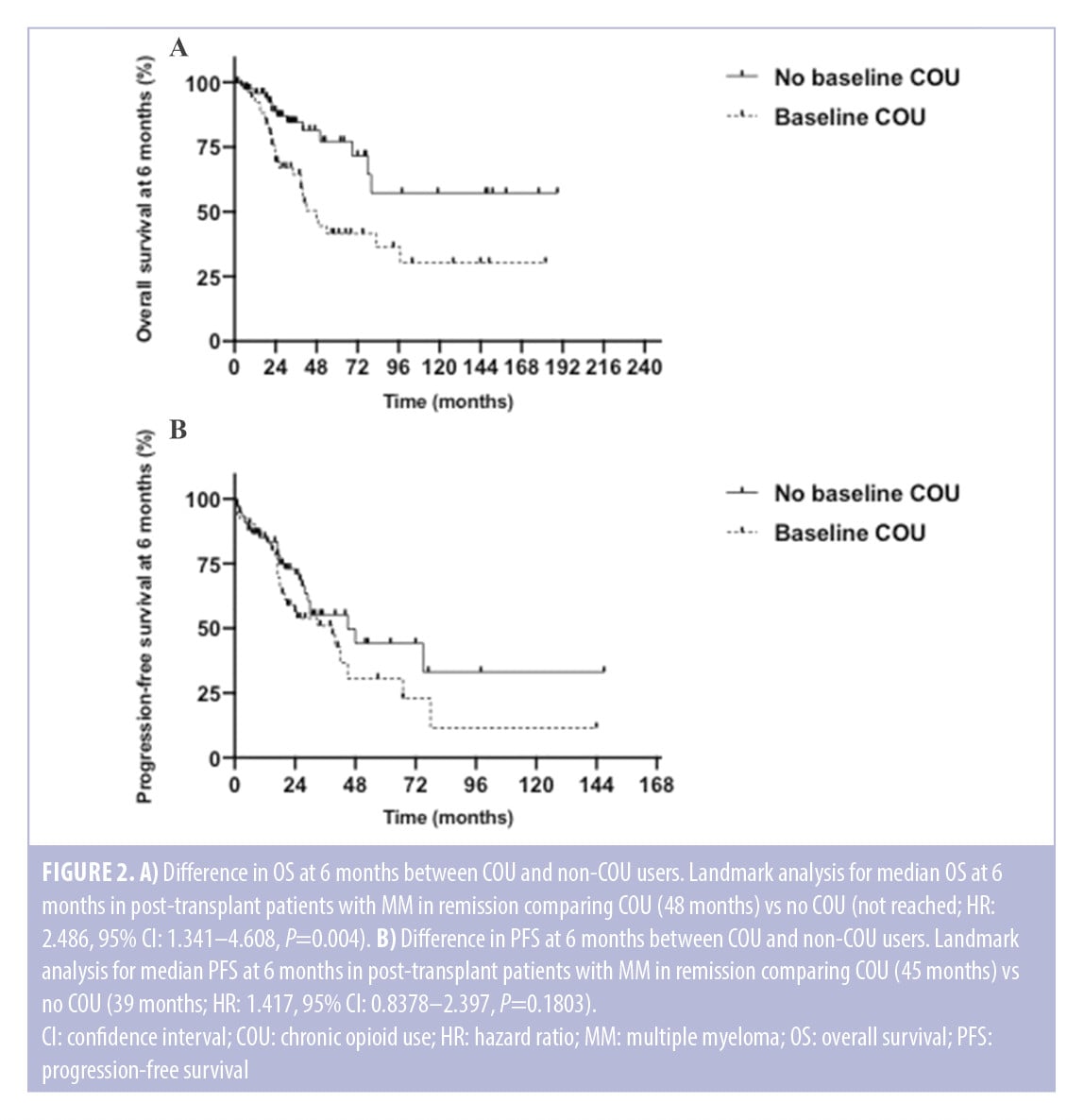
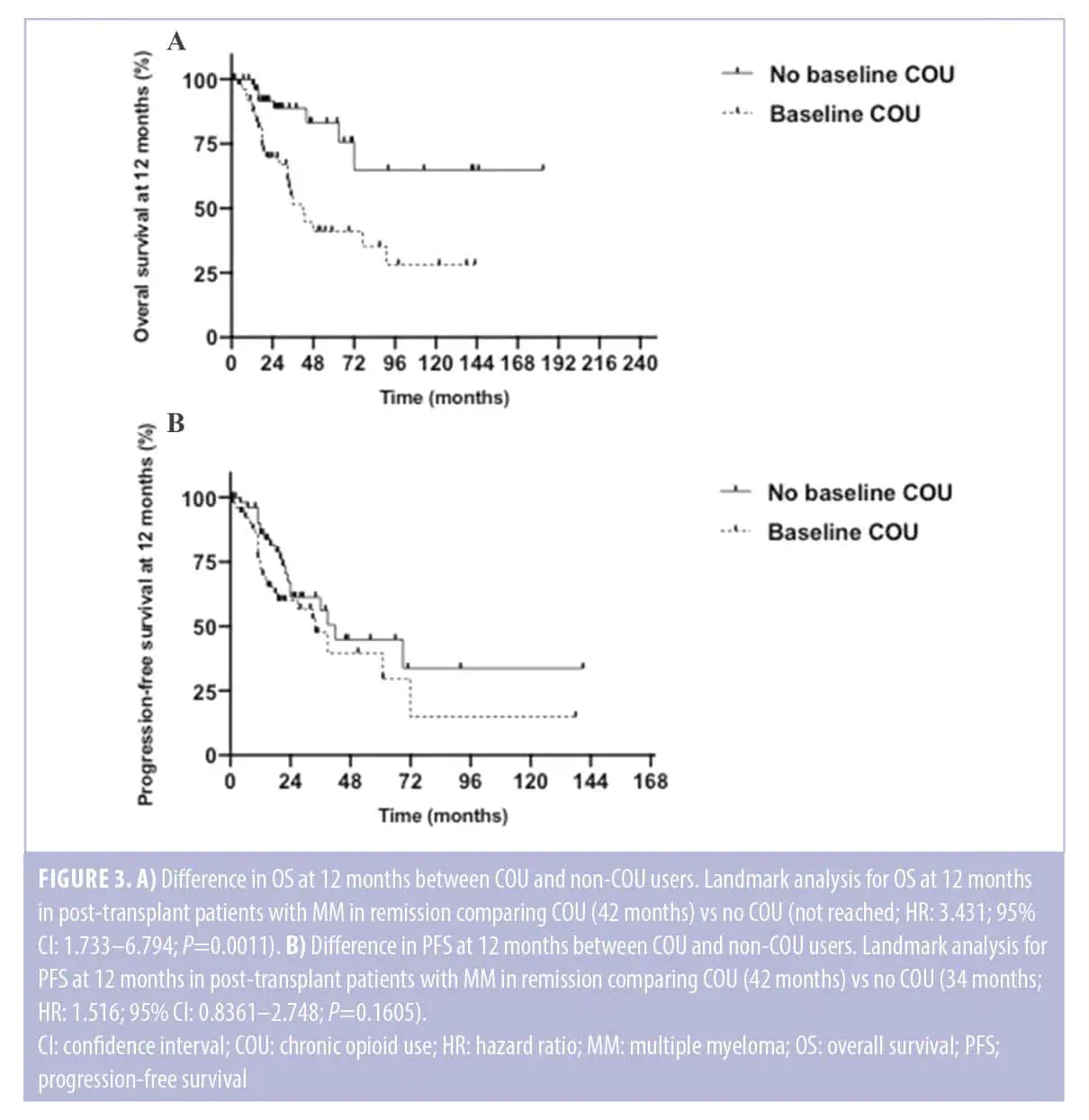
For analysis of survival, patients who progressed within 6 months of ASCT were excluded from the analysis and OS and PFS was landmarked from 6 months. Although the median PFS was similar between 6-month non-COU and COU users (45 vs 39 months, P=0.1803), OS was significantly inferior among patients with COU at 6 months (48 months vs not reached, P=0.004; Figures 2A–B). Similarly, in patients with COU at 1 year, PFS was similar (42 vs 34 months, P=0.1605) but OS was significantly worse (42 months vs not reached, P=0.0011, Figures 3A–B). In a multivariate model, we found that COU at 6 months strongly predicted for worse OS (hazard ratio [HR]: 6.71, 95% CI: 1.73–26.09; P=0.006).’
Discussion
Pain is one of the most common and complex symptoms experienced by patients with MM.4,19 While bone-directed therapies like zoledronic acid decrease skeletal-related events, we presume chronic microarchitectural changes in the bone lead to progressive deformities and persistent chronic pain. Patients can also develop painful neuropathy from the use of bortezomib, which can persist for months to years after discontinuation.20 Additionally, as patients with MM are immunosuppressed during active disease or during treatment, they can experience acute and chronic post-herpetic pain due to varicella zoster reactivation.21,22 Finally, during autologous transplant, patients can develop acute pain from granulocyte colony-stimulating factor use or from alkylator-associated mucositis, though this follows a predictable course and resolves in most patients. Thus, opioid analgesics are often a necessary component of the multimodal treatment of acute or chronic pain in patients with MM, but at the same time, it is well-recognized that chronic opiate use opioids at the time of transplant, it did not clarify whether this use was chronic.23 The prevalence of COU observed at baseline in patients with MM in our study is higher compared to patients with a history of cancer (42.8%; 95% CI: 41.2%−44.5%), as reported in a cross-sectional study using data from the National Survey on Drug Use and Health (NSDUH).8 Interestingly in our cohort, baseline COU rates were not related to the presence of bone disease as initially hypothesized but a psychosocial correlate such as previous illicit drug use was found to be a strong predictor for COU.
The dramatic improvement in therapeutic options for MM in the last 2 decades have led to prolonged patient survival and quality of life with a notable reduction in pain symptoms.24 Nevertheless, given the morbidity associated with diagnosis and the prevalent use of opioids that we have shown in our population, it’s not surprising that opioid use has been shown to be more prevalent among long-term MM survivors when compared to breast cancer and lymphoma survivors.25,26 For example, in a survey study of patients who survived 5 or more years after ASCT, patients with MM reported significantly higher use of pain medications (32%) than patients with lymphoma.23 A more recent study revealed that 34.8% of patients with MM were using opioids, with opioid use more frequent in younger patients and patients with bone lesions. At 1 year, 31.9% were still using opioids, and continued use did not correlate with disease response. Of patients using opioids at time of ASCT, 58% either maintained or increased the dose at 1-year post-transplant.27 Similarly, we demonstrated in our study that opioid use at hospital discharge was a strong predictor of COU at 6 months, highlighting the importance to re-examine the pain regimen at each clinic visit.
As expected, patients with MM are also not completely insulated from opioid risk, and a large study of emergency room visits for opioid overdoses among patients with cancer indicated that patients with head and neck cancer and patients with MM were at higher risk for opioid overdose compared to patients without cancer.12 There are limited studies of the adverse events related to opioid use in myeloma, however, one qualitative study using semistructured interviews revealed that patients recalled a median of 2 side effects related to the use of analgesics including opioids.28 Lastly, patients with myeloma and other cancers are often vulnerable to emotional and psychological distress that might exacerbate their physical pain, increasing their likelihood of nonmedical opioid use. A study by Iqbal et al29 found that among hematopoietic SCT recipients, patients who were both anxious and depressed at admission had increased odds of receiving an opioid.
As the risks of prolonged opioid use in the absence of active disease in myeloma survivors is not known, we aimed to describe the patterns of COU among patients with MM undergoing ASCT, in long-term survivors, and then determine the impact of COU on survival outcomes. We demonstrated high rates of baseline COU unrelated to the presence of bone disease, and that the mean MME/day throughout the disease course is relatively high. We highlight a high rate of opiate use at discharge after ASCT, including a number of new users, which results in ongoing COU at 6 months. Exposure to opioids during treatment for acute pain (ie, inpatient admissions) has been linked to long-term opioid use.30 Our findings reveal the adverse effect of COU at 6 months on OS but not PFS, suggesting that opioid-related deaths may be contributing to these observations. Notably, nonopioid analgesic use correlated with a lower risk of COU and thus may be appropriate in managing pain effectively and safely. We also show a high rate of coprescribing of tramadol with other opioids. Prior studies have indicated that the highest probabilities of continued opioid use at 1 year were observed among patients who initiated treatment with a long-acting opioid followed by those whose initial treatment was with tramadol.16
There are limitations of our study. The electronic medical record was queried to obtain active opioid prescription fill data; however, the Illinois Prescription Drug Monitoring Program (PDMP) could also have been used to capture other data, including the number of prescribers and pharmacies associated with opioid prescribing. A potential risk factor for COU after ASCT is a history of opioid use preceding the diagnosis of myeloma. Due to the retrospective nature of our study, we could not accurately capture indications for pretransplant initiation of opioids. While inpatient progress notes documented reasons for opioid prescribing during the transplant hospitalization, reasons for baseline opioid use (ie, neuropathic vs bone pain) could not be identified reliably through the electronic health records. Therefore, it is unclear how bone and neuropathic pain trajectories changed over time and might have contributed to COU patterns. A better understanding of the type of pain being experienced will help inform tailored approaches to address specific types of pain. Despite this, we observe a spike in opioid use during hospitalization, and this is worth investigating further to inform systematic interventions to improve quality of life. Furthermore, while we did not identify psychiatric illness as a predictor of COU in this study, it has been strongly linked to opioid use and misuse in patients with and without cancer. We relied on documented past medical histories to determine whether a patient had a psychiatric illness, but it could be that these were not formally diagnosed (ie, anxiety, depression) or accurately documented. Race was not an independent predictor of baseline COU, and we hypothesize this is likely a result of inadequate distribution of races, with predominantly Black and Hispanic patients in our cohort. This warrants further investigation given that prior data has suggested differences in opioid prescribing, access to opioids, referrals to palliative care programs, and opioid overdose deaths in Black patients when compared to White patients.31–33 Finally, given the retrospective nature of data collection, it was difficult to ascertain the cause of mortality among patients, and whether it was opioid-related, in this dataset. Our findings warrant validation using a larger dataset where data on opioid-related death is available.
In addition to frequent reassessment of the need for continued opioid use, our results suggest the importance of exploring other strategies to treat pain in myeloma, including pharmacological treatments (ie, mixed opioid agonists, methadone, topical agents, nonsteroidal analgesics, tetrahydrocannabinol- or cannabidiol-based systemic or topical products), nonpharmacological therapies (ie, physical therapy, acupuncture,34 meditation,35 exercise), neurobehavioral treatments (ie, cognitive behavioral therapy), and interventional treatments (ie, epidural, local nerve blocks, kyphoplasty). Additionally, during survivorship, patients often experience long-term effects like anxiety, depression, pain, and effects on physical functioning.36 Opioids may be misused to relieve these symptoms. Use of opioids to treat nonpain symptoms or to avoid the psychological distress of cancer overlaps with opioid use disorder (OUD) and is present in up to 20% of patients with cancer.37 Thus, assessment of pain and fatigue should routinely include screening for psychological distress with interventions for psychological distress considered as adjuvant intervention strategies for pain and fatigue. Finally, clinicians should be encouraged to assess for the risk of developing OUD, with several validated screening tools available, including the Opioid Risk Tool (ORT), the Brief Risk Questionnaire (BRQ), and the Pain Medication Questionnaire (PMQ).38–40 With increasing survival in myeloma, awareness of the risks of long-term opioid use and perhaps early involvement by palliative care, in particular during the post-transplant hospitalization phase, would enable appropriate and earlier discontinuation of opioid therapy in these patients.
Author Contributions
KS, AA, KK, JS, EW, and EI contributed to collection and organization of data. KS, PP, and GSC contributed to the study design and analysis of data. KS, AA, PP, CH, LS, and JQ contributed to the writing of the manuscript. All authors assisted in the critical review of the manuscript and all authors approved the final version of the manuscript for submission.
Ethics approval
This research study was conducted retrospectively from data obtained for clinical purposes. We consulted with the Institutional Review Board (IRB) of University of Illinois who determined that our study did not need ethical approval. An IRB official waiver of ethical approval was granted from the IRB of University of Illinois.
References
- Kyle RA, Gertz MA, Witzig TE, et al. Review of 1027 patients with newly diagnosed multiple myeloma. Mayo Clin Proc. 2003;78(1):21–33.
- Terpos E, Berenson J, Cook RJ, et al. Prognostic variables for survival and skeletal complications in patients with multiple myeloma osteolytic bone disease. Leukemia. 2010;24(5):1043–1049.
- Moreau P, Pylypenko H, Grosicki S, et al. Subcutaneous versus intravenous administration of bortezomib in patients with relapsed multiple myeloma: a randomised, phase 3, non-inferiority study. Lancet Oncol. 2011;12(5):431–440.
- Terpos E, Zamagni E, Lentzsch S, D et al. Treatment of multiple myeloma-related bone disease: recommendations from the bone working group of the international myeloma working group. Lancet Oncol. 2021;22(3):e119–e130.
- Dowell D, Ragan KR, Jones CM, et al. CDC clinical practice guideline for prescribing opioids for pain – United States, 2022. MMWR Recomm Rep. 2022;71(3):1–95.
- Paice JA, Bohlke K, Barton D, et al. Use of opioids for adults with pain from cancer or cancer treatment: ASCO guideline. J Clin Oncol. 2023;41(4):914–930.
- Shi Q, Smith TG, Michonski JD, et al. Symptom burden in cancer survivors 1 year after diagnosis: a report from the American cancer society’s studies of cancer survivors. Cancer. 2011;117(12):2779–2790.
- Jairam V, Yang DX, Verma V, et al. National patterns in prescription opioid use and misuse among cancer survivors in the United States. JAMA Netw Open. 2020;3(8):e2013605.
- Chino F, Kamal A, Chino J. Incidence of opioid-associated deaths in cancer survivors in the United States, 2006–2016: a population study of the opioid epidemic. JAMA Oncol. 2020;6(7):1100–1102.
- van den Beuken-van Everdingen MH, Hochstenbach LM, Joosten EA, et al.Update on prevalence of pain in patients with cancer: systematic review and meta-analysis. J Pain Symptom Manage. 2016;51(6):1070–1090.e9.
- Sutradhar R, Lokku A, Barbera L. Cancer survivorship and opioid prescribing rates: a population-based matched cohort study among individuals with and without a history of cancer. Cancer. 2017;123(21):4286–4293.]
- Jairam V, Yang DX, Yu JB, Park HS. Emergency department visits for opioid overdoses among patients with cancer. J Natl Cancer Inst. 2020;112(9):938–943.
- Harris PA, Taylor R, Thielke R, et al. Research electronic data capture (REDCap)–a metadata-driven methodology and workflow process for providing translational research informatics support. J Biomed Inform. 2009;42(2):377–381.
- Sonneveld P, Avet-Loiseau H, Lonial S, Usmani S, et al. Treatment of multiple myeloma with high-risk cytogenetics: a consensus of the international myeloma working group. Blood. 2016;127(24):2955–2962.
- Rajkumar SV, Dimopoulos MA, Palumbo A, et al. International Myeloma Working Group updated criteria for the diagnosis of multiple myeloma. Lancet Oncol. 2014;15(12):e538–e548.
- Shah A, Hayes CJ, Martin BC. Characteristics of initial prescription episodes and likelihood of long-term opioid use – United States, 2006–2015. MMWR Morb Mortal Wkly Rep. 2017;66(10):265–269.
- Von Korff M, Saunders K, Thomas Ray G, et al. De facto long-term opioid therapy for noncancer pain. Clin J Pain. 2008;24(6):521–527.
- Module 6: Dosing and titration of opioids: how much, how long, and how and when to stop? Centers for Disease Control and Prevention. https://www-cdc-gov.proxy.cc.uic.edu/drugoverdose/training/dosing/accessible/index.html
- Terpos E, Ntanasis-Stathopoulos I, Gavriatopoulou M, Dimopoulos MA. Pathogenesis of bone disease in multiple myeloma: from bench to bedside. Blood Cancer J. 2018;8(1):7.
- Dimopoulos MA, Mateos MV, Richardson PG, et al. Risk factors for, and reversibility of, peripheral neuropathy associated with bortezomib-melphalan-prednisone in newly diagnosed patients with multiple myeloma: subanalysis of the phase 3 VISTA study. Eur J Haematol. 2011;86(1):23–31.
- Konig C, Kleber M, Reinhardt H, et al. Incidence, risk factors, and implemented prophylaxis of varicella zoster virus infection, including complicated varicella zoster virus and herpes simplex virus infections, in lenalidomide-treated multiple myeloma patients. Ann Hematol. 2014;93(3):479–484.
- Chanan-Khan A, Sonneveld P, Schuster MW, et al. Analysis of herpes zoster events among bortezomib-treated patients in the phase III APEX study. J Clin Oncol. 2008;26(29):4784–4790.
- Georges GE, Bar M, Onstad L, et al. Survivorship after autologous hematopoietic cell transplantation for lymphoma and multiple myeloma: late effects and quality of life. Biol Blood Marrow Transplant. 2020;26(2):407–412.
- Voorhees PM, Kaufman JL, Laubach J, et al. Daratumumab, lenalidomide, bortezomib, and dexamethasone for transplant-eligible newly diagnosed multiple myeloma: the GRIFFIN trial. Blood. 2020;136(8):936–945.
- Roberts AW, Fergestrom N, Neuner JM, Winn AN. New-onset persistent opioid use following breast cancer treatment in older adult women. Cancer. 2020;126(4):814–822.
- Boland E, Eiser C, Ezaydi Y, et al. Living with advanced but stable multiple myeloma: a study of the symptom burden and cumulative effects of disease and intensive (hematopoietic stem cell transplant-based) treatment on health-related quality of life. J Pain Symptom Manage. 2013;46(5):671–680.
- Danish ML, Shah MR, Lin Y, et al. Persistent opioid use in patients with multiple myeloma post-ASCT. Eur J Haematol. 2022;108(6):503–509.
- Sloot S, Boland J, Snowden JA, et al. Side effects of analgesia may significantly reduce quality of life in symptomatic multiple myeloma: a cross-sectional prevalence study. Support Care Cancer. 2015;23(3):671–678.
- Iqbal M, Spaulding AC, Wood C, et al. Impact of depression or anxiety on opioid and benzodiazepine use in hospitalized hematopoietic stem cell transplantation (HSCT) recipients. Blood. 2018;132(Suppl 1):4852.
- Shah A, Hayes CJ, Martin BC. Factors influencing long-term opioid use among opioid naive patients: an examination of initial prescription characteristics and pain etiologies. J Pain. 2017;18(11):1374–1383.
- Larochelle MR, Slavova S, Root ED, et al. Disparities in opioid overdose death trends by race/ethnicity, 2018–2019, from the healing communities study. Am J Public Health. 2021;111(10):1851–1854.
- Crawley L, Payne R, Bolden J, et al. Palliative and end-of-life care in the African American community. JAMA. 2000;284(19):2518–2521.
- Enzinger AC, Ghosh K, Keating NL, et al. Racial and ethnic disparities in opioid access and urine drug screening among older patients with poor-prognosis cancer near the end of life. J Clin Oncol. 2023;41(14):2511–2522.
- Deng G, Giralt S, Chung DJ, et al. (2020) Reduction of opioid use by acupuncture in patients undergoing hematopoietic stem cell transplantation: secondary analysis of a randomized, sham-controlled trial. Pain Med. 2020;21(3):636–642.
- Okolo O, Wertheim BC, Larsen A, et al. Integrative medicine in multiple myeloma and plasma cell disorders. Complement Ther Med. 2023;73:102939.
- Banerjee R, Lazar AA, Dunn L, et al. Benzodiazepine and zolpidem prescriptions during autologous stem cell transplantation. EJHaem. 2021;2(2):276–279.
- Del Fabbro E. Assessment and management of chemical coping in patients with cancer. J Clin Oncol. 2014;32(16):1734–1738.
- Webster LR, Webster RM. Predicting aberrant behaviors in opioid-treated patients: preliminary validation of the opioid risk tool. Pain Med. 2005;6(6):432–442.
- Jones T, Lookatch S, Grant P, et al. Further validation of an opioid risk assessment tool: the brief risk interview. J Opioid Manag. 2014;10(5):353–364.
- Holmes CP, Gatchel RJ, Adams LL, et al. An opioid screening instrument: long-term evaluation of the utility of the pain medication questionnaire. Pain Pract. 2006;6(2):74–88.